
Orchard Renaissance: Restorative Pruning for Neglected Apple Trees
A multi-season strategy to reclaim vigour and fruitfulness from neglected apple trees, focusing on structural integrity and balanced regrowth.
Season One: Assessment and Structural Re-alignment
Neglected apple trees often present a dense, chaotic canopy, a consequence of years of unmanaged growth. The initial phase of restorative pruning is diagnostic. Before any cuts are made, a thorough assessment of the tree's existing framework is paramount. Identify the main scaffold branches, their angles, and the overall tree shape. Look for signs of disease, pest infestation, or structural weaknesses. The objective this season is not to drastically reduce the canopy, but to establish a clear direction for future growth and begin correcting major structural faults.
- Examine the tree from all angles, noting the dominant scaffold limbs and their general health.
- Identify any dead, diseased, or damaged wood. These are immediate removal targets.
- Look for branches that are crossing or rubbing against each other. Plan to remove one of the pair to prevent future damage and disease entry points.
- Assess the density of the canopy. Where is it excessively thick? Where are there large, unproductive gaps?
- Consider the tree's vigour. Is it weak and spindly, or are there signs of excessive, weak vegetative growth (watershoots)?
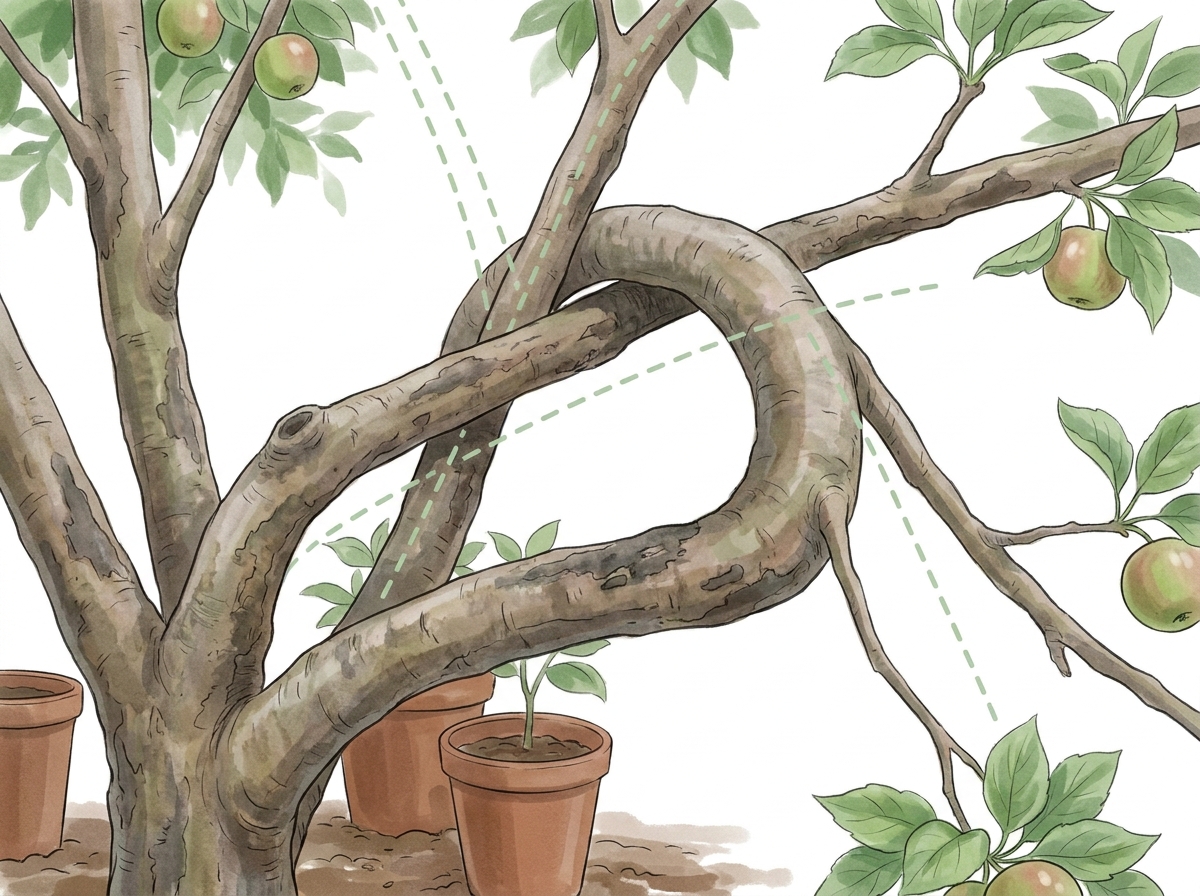
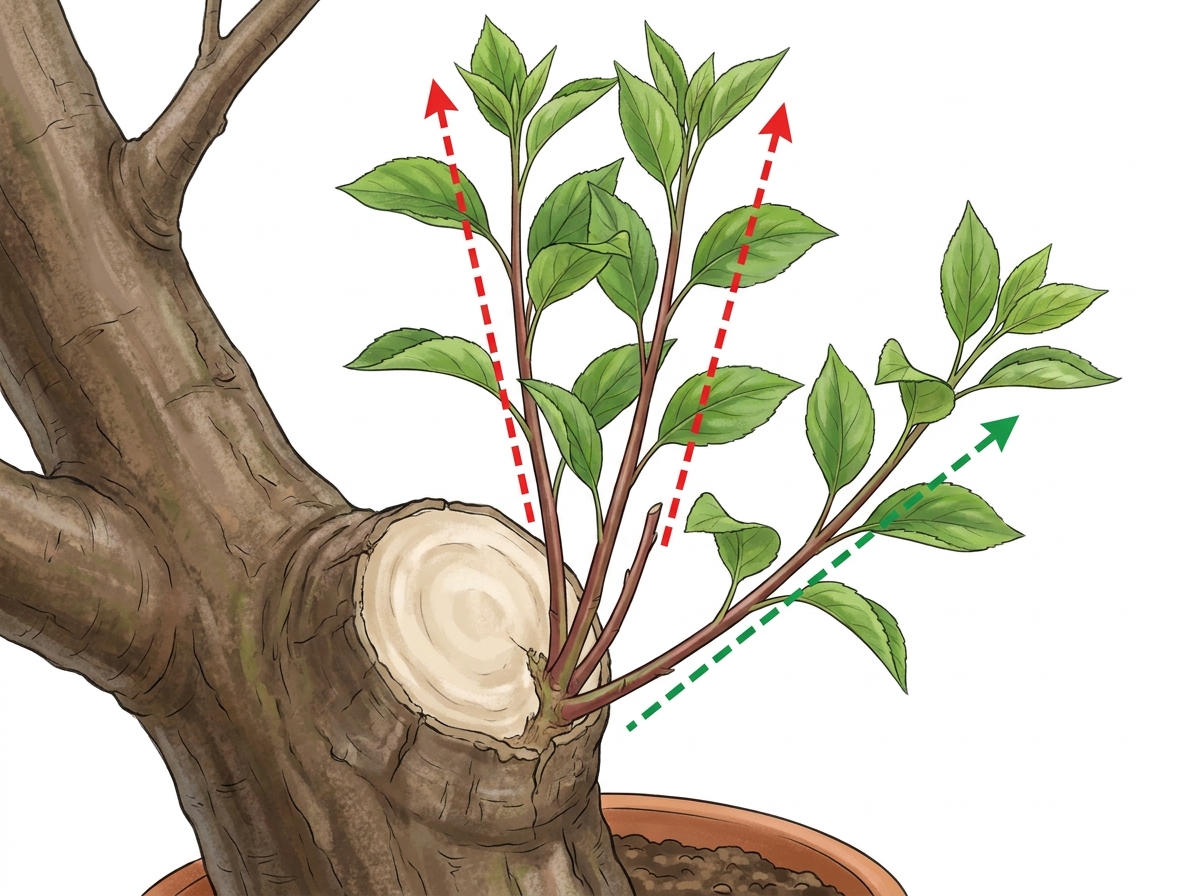
The cardinal rule of restorative pruning is the 'one-third rule'. Never remove more than one-third of the tree's total canopy in a single season. Overzealous pruning, especially removing too much at once, signals to the tree that it has lost a significant portion of its photosynthetic capacity. In response, it will expend its stored energy producing numerous weak, upright shoots known as watershoots, which are generally unproductive and can quickly lead to renewed congestion.
Begin by removing the most egregious structural faults: dead, diseased, or broken branches. Then, address crossing or rubbing branches, removing the less desirable one. Prioritise opening the centre of the tree to improve light penetration and air circulation. This often involves removing branches growing inwards or downwards at acute angles. Aim to create a balanced, open vase shape, even if it takes several years to achieve fully.
Always use sharp, sterilised pruning tools. For larger branches, a pruning saw is necessary. When working at height, ensure stable footing on a sturdy ladder. Never overreach. If dealing with extensive disease, consider wearing gloves and washing hands thoroughly afterwards.
Season Two: Refining the Framework and Managing Regrowth
In the second season, focus shifts to refining the established framework and managing the regrowth from the previous year. You should see a reduction in congestion and improved light penetration. Look for any watershoots that have emerged from the cuts made last season. While some vigour is desirable, excessive watershoots indicate the tree is still trying to compensate for past stress. Selectively remove the weakest or most poorly positioned watershoots, aiming to retain a few strong, well-placed ones that can contribute to future fruiting or structural development.
- Re-assess the tree's structure. Has the desired openness been achieved in the areas you worked on?
- Identify and remove any new watershoots that are growing vertically and are unlikely to fruit.
- Look for branches that have started to shade out desirable, lower-growing fruiting wood. Thin these out.
- Continue to address any crossing or rubbing branches that may have developed.
- If the tree is producing new fruiting spurs, encourage their development by lightly thinning competing growth.
Continue to apply the one-third rule. Any significant pruning should still be limited to a third of the remaining canopy. The goal is to gradually build a strong, productive structure, not to force rapid growth. Focus on improving the balance of fruiting wood and vegetative growth. Remove any branches that are growing too horizontally or downwards from the main scaffolds, as these are less likely to bear fruit well and can become weak points.
Season Three and Beyond: Maintenance and Fruiting Encouragement
By the third season, the tree should exhibit a more defined structure and improved vigour. The focus now shifts to maintenance pruning, encouraging fruit production, and managing ongoing growth. Continue to thin out any congested areas and remove unproductive wood. Look for opportunities to train new growth to fill any remaining gaps or to replace older, less productive branches. The aim is to maintain the open structure, ensuring good light and air penetration to all parts of the tree, which is crucial for fruit quality and disease prevention.
- Perform annual maintenance pruning, removing any dead, diseased, or crossing wood.
- Thin out any overly dense fruiting spurs to improve fruit size and quality.
- Remove any watershoots that emerge from main scaffold cuts.
- Encourage fruiting wood by tipping back overly vigorous shoots if necessary, but avoid heavy pruning.
- Monitor for any signs of renewed neglect or structural issues.
Knowing when a tree is beyond restoration is crucial. If the main scaffold structure is severely compromised by disease (e.g., canker, fire blight), extensive rot, or physical damage (e.g., splitting from wind or heavy crop load), it may be more practical to remove and replace the tree. Trees that are extremely old and have developed a dense, woody core with little sign of healthy new growth, even after two to three years of careful restorative pruning, may also be considered beyond saving. In such cases, a pragmatic horticultural decision is to replant with a more vigorous, disease-resistant variety.