Mastering Rose Pruning: Shape, Health, and Blooms
Unlock your rose's potential with expert pruning techniques for every type of rose.
Pruning is essential for rose health, shape, and abundant flowering. It removes dead or diseased wood, encourages new growth, and improves air circulation, which helps prevent fungal diseases. The 'why' is simple: a well-pruned rose is a happy, productive rose.
When to Prune Your Roses
The primary pruning for most roses occurs in late winter or early spring, just as the plant is about to break dormancy. You're looking for the soil to be workable – not frozen or waterlogged. Avoid pruning in the heat of summer, as this can stress the plant, or in autumn, as new growth stimulated then can be damaged by frost.
Understanding Rose Types and Their Pruning Needs
- Hybrid Teas: Prune moderately hard to encourage strong, single blooms on long stems. Aim to create an open, goblet shape.
- Floribundas: Prune less severely than Hybrid Teas to encourage clusters of flowers. Remove about a third of the growth.
- Shrub Roses: Generally require less intensive pruning. Remove dead, diseased, or crossing wood, and thin out older stems to encourage new basal growth. Some repeat-flowering shrub roses benefit from a light trim after flowering too.
- Climbing Roses: Train them onto their support structure. Prune to remove old, unproductive wood and to shorten side shoots (laterals) to two or three buds. Aim to keep the main, thicker stems horizontal or gently arching to encourage flowering.
- Rambling Roses: These are often pruned after flowering, as they tend to flower on older wood. Remove any old, weak, or dead stems right back to the base. They need less frequent, but can be more drastic, pruning than climbers.
The Art of the Cut: Where and How
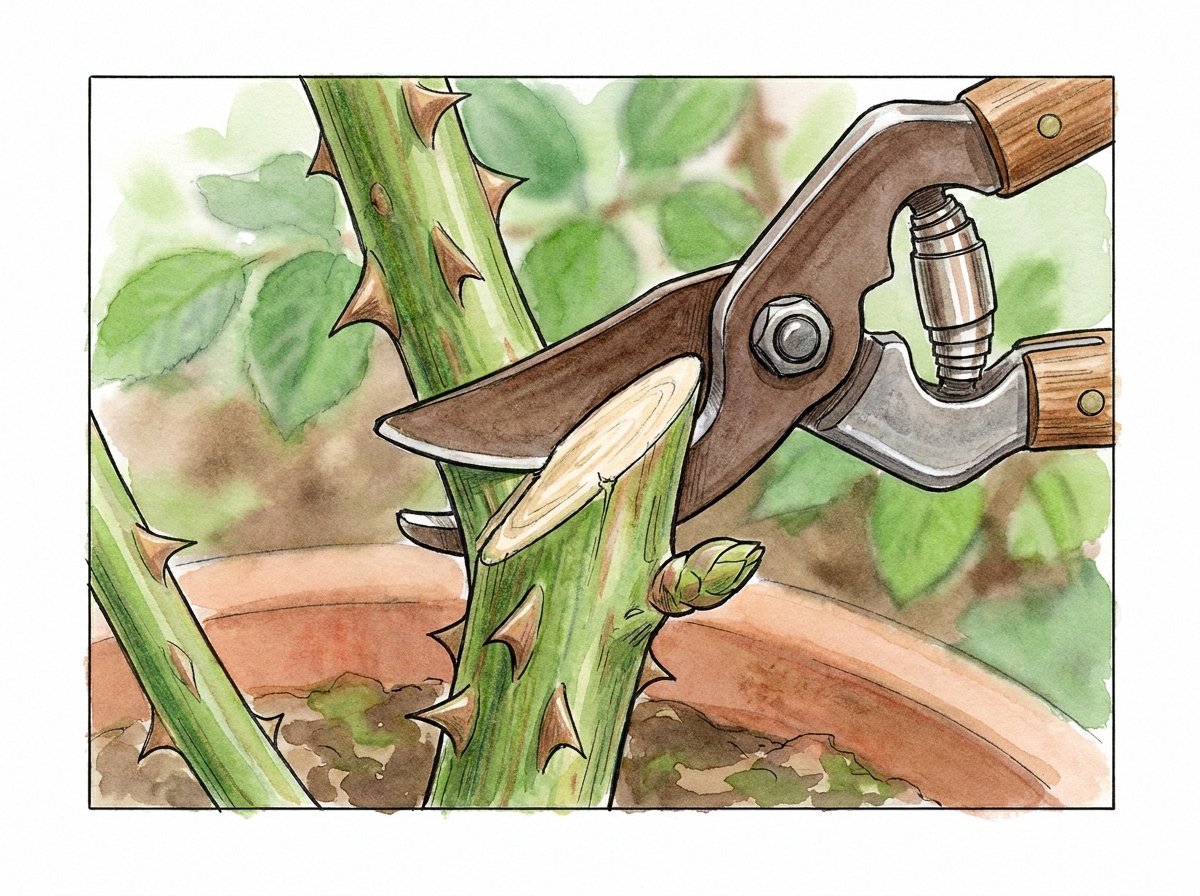
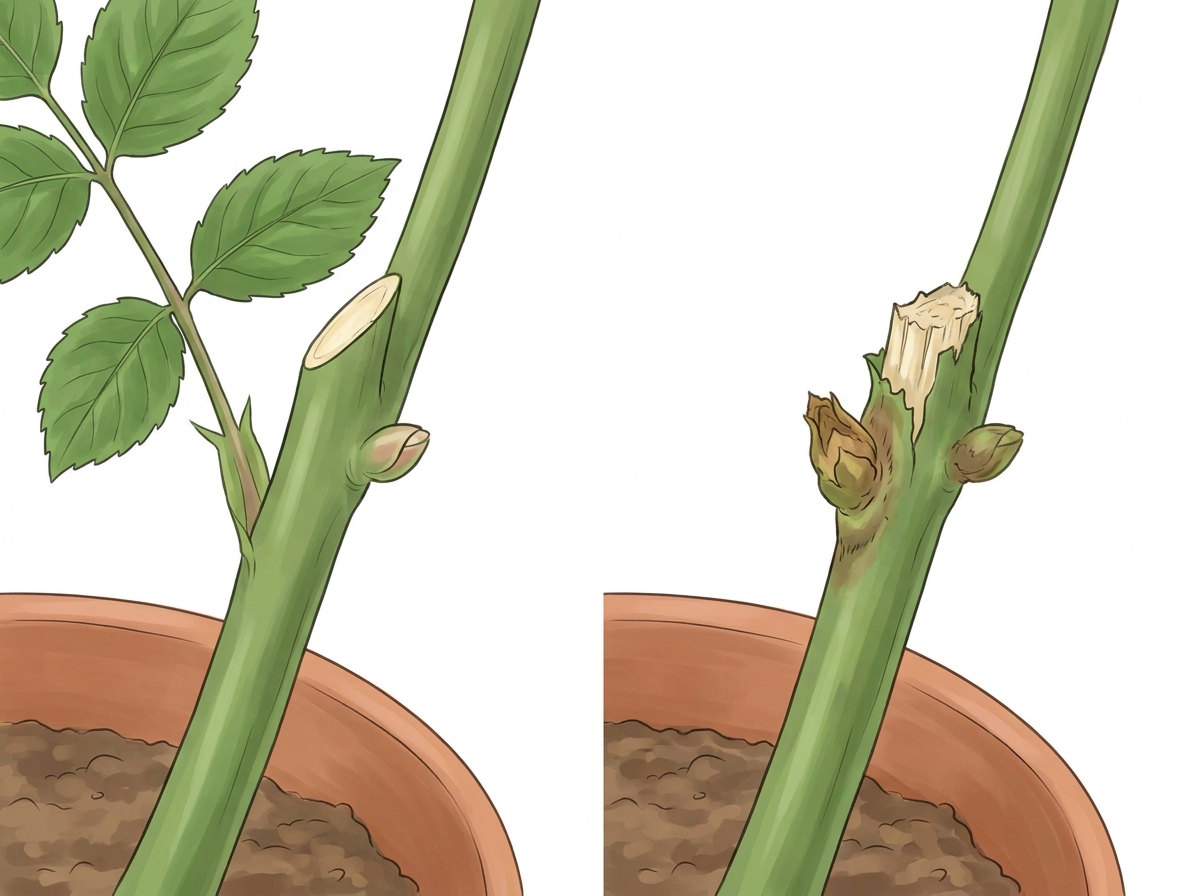
The key to a good pruning cut is to stimulate healthy new growth. Always cut just above an outward-facing bud. This directs new growth outwards, preventing congestion in the centre of the plant and improving air circulation. The cut should be at a slight angle (around 45 degrees), sloping away from the bud. This allows water to run off, reducing the risk of disease entering the wound.
Renewal Pruning: Hard vs. Light
Renewal pruning rejuvenates older plants. 'Hard' renewal involves removing about a third of the oldest, thickest stems right down to the base each year. This encourages strong new basal shoots. 'Light' renewal, often used for shrub roses or after the main prune, involves thinning out weak or twiggy growth and shortening remaining stems.
Essential Pruning Tasks
- Dead, Diseased, or Damaged Wood: Remove any stems that are clearly dead (brown and brittle), show signs of disease (cankers, unusual spots), or are broken.
- Crossing or Rubbing Branches: Identify stems that cross over or rub against each other. Remove the weaker or less well-placed of the two to prevent wounds and disease entry.
- Water Shoots and Suckers: Remove vigorous, upright 'water shoots' growing from the main stem or rootstock (suckers) as soon as you see them. Suckers will have different leaf shapes and textures.
Tool Hygiene is Crucial
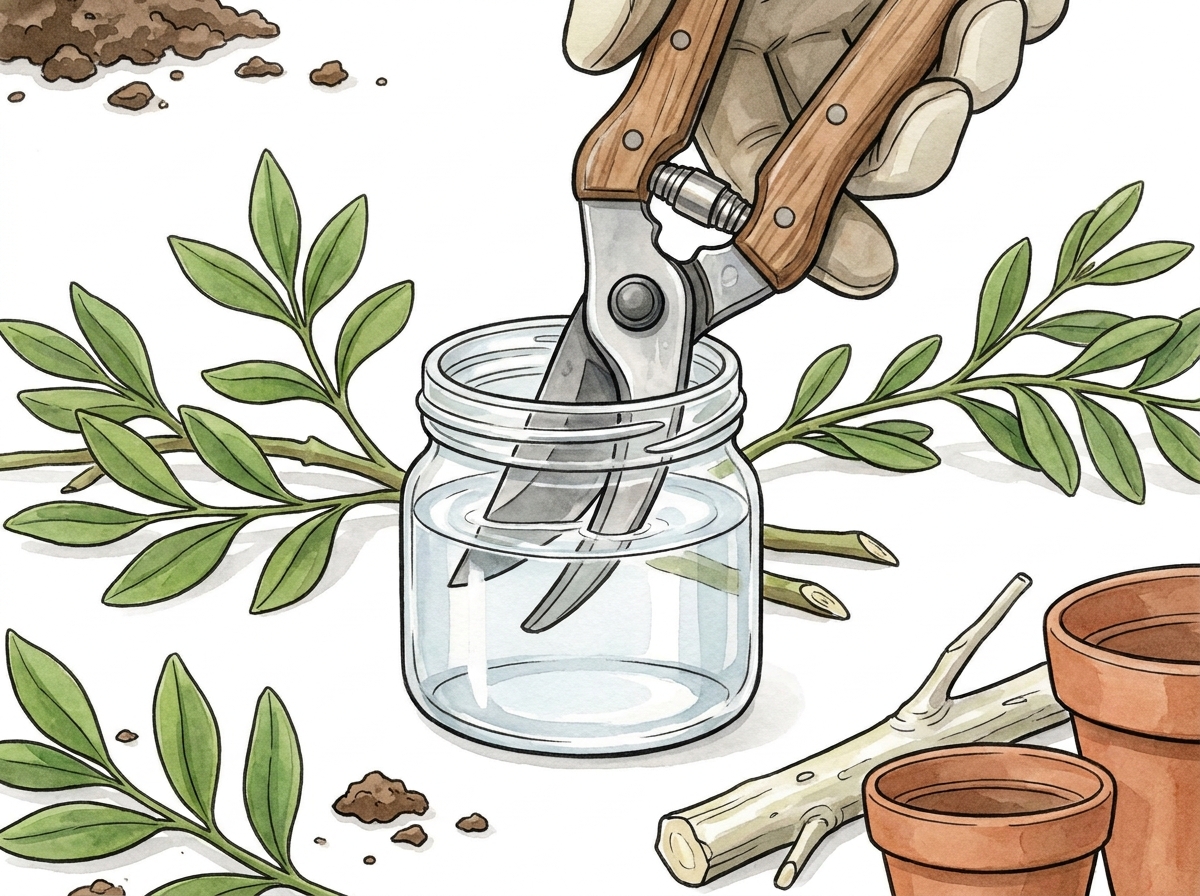
Garden tools can spread diseases between plants. Always sterilise your secateurs, loppers, and saws before you start pruning and between plants, especially if you encounter any diseased wood. A solution of 1 part bleach to 9 parts water, or methylated spirits, works well. Rinse tools thoroughly after using bleach.
Always wear sturdy gloves when pruning roses to protect yourself from thorns. If using loppers or saws on larger stems, ensure you have a stable footing or use a secure ladder. Keep blades sharp for clean cuts. If dealing with diseased wood, wear separate gloves and wash your hands thoroughly afterwards.