
Mastering Propagation: A Comparative Study of Cuttings
Optimise your propagation success by understanding the nuances of softwood, semi-ripe, and hardwood cuttings.
Understanding Wood Maturity: The Key to Success
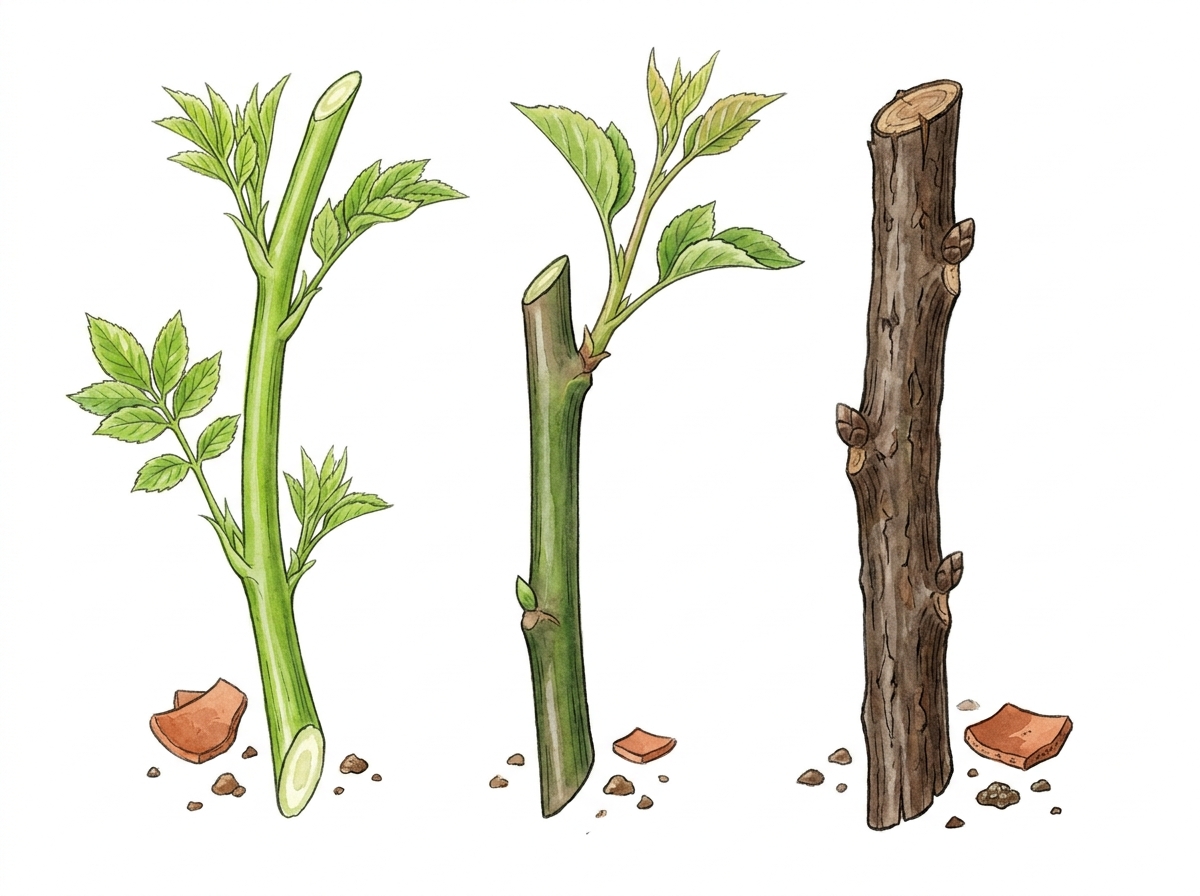
Successful propagation via cuttings hinges on selecting material at the optimal stage of maturity. This varies significantly between plant species and time of year. Softwood cuttings are from the current season's vigorous, non-woody growth, typically taken in late spring to early summer. They root fastest but are most prone to desiccation. Semi-ripe cuttings, harvested in mid to late summer, represent a transition. The base has begun to lignify, offering more structural integrity, while the tip remains pliable. Hardwood cuttings, taken during the plant's dormancy, usually in late autumn or winter, are fully mature, woody stems. They are the most resilient but also the slowest to root, often requiring extended periods.
Cuttings: Selection and Preparation
- Softwood Cuttings: Select healthy, vigorous shoots that are actively growing but not yet flowering. The ideal cutting is 5-10 cm (2-4 inches) long, with at least two sets of leaves. Remove the lower leaves to expose at least one node. Make the cut just below a node.
- Semi-ripe Cuttings: Choose shoots that have started to firm up but are still flexible. The base should show signs of lignification, while the tip remains soft. Length and leaf removal are similar to softwood cuttings.
- Hardwood Cuttings: Take cuttings from mature, dormant woody stems, ideally pencil-thick (6-10 mm or 1/4-3/8 inch). Cuttings should be 15-30 cm (6-12 inches) long. Ensure they have at least two or three nodes. A 'heel' cut, where a small piece of older wood is retained, can sometimes improve rooting, particularly for species that root poorly.
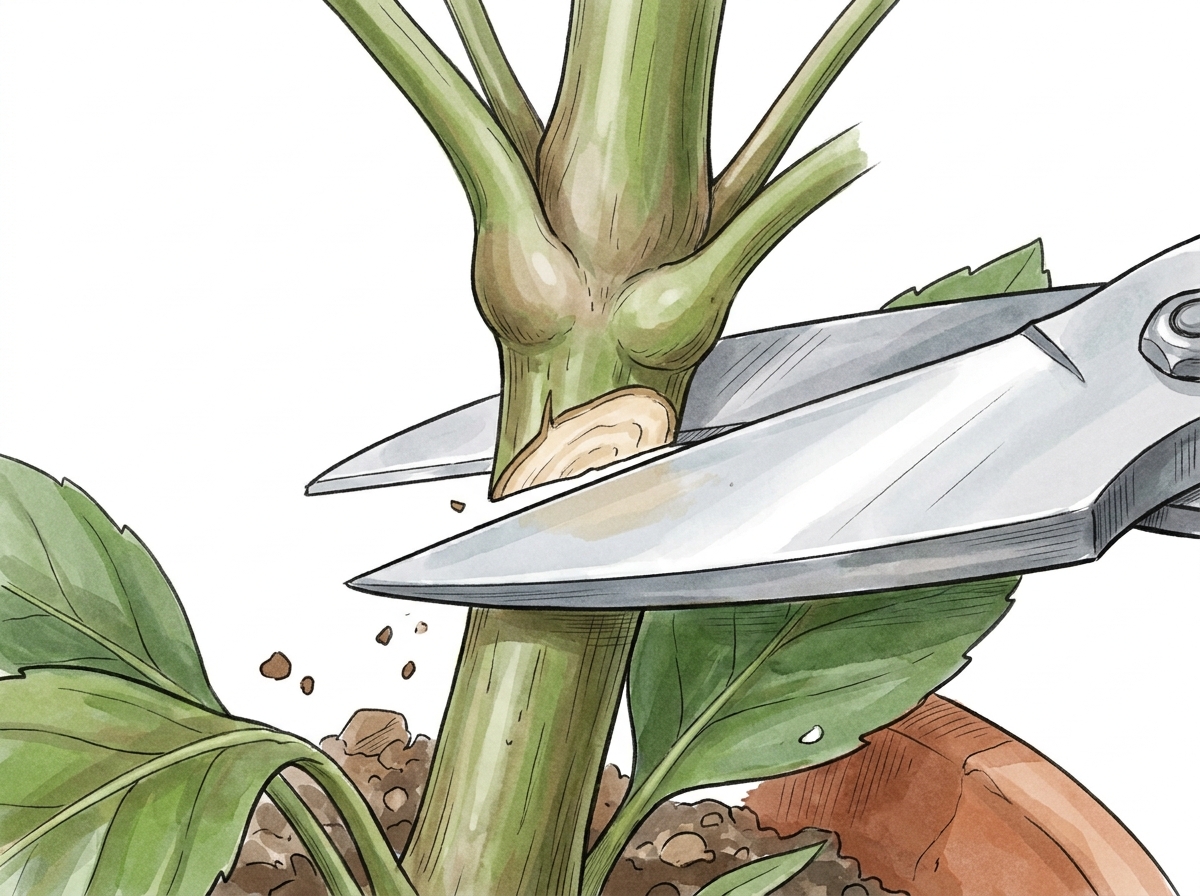
- Node and Heel Choices: Cuts should always be made cleanly just below a node, as this is where adventitious roots are most likely to form. For hardwood cuttings, a heel can be beneficial; this involves stripping a sliver of bark and underlying wood downwards from the base of the cutting, exposing the vascular cambium. This technique is species-dependent and can be detrimental if done incorrectly.
Hormone Application and Rooting Media
Auxin-based rooting hormones (commonly indole-3-butyric acid, IBA) can significantly enhance rooting success, particularly for species that are difficult to root. For softwood and semi-ripe cuttings, a dilute liquid or powder formulation is typically used. Apply to the cut end and lower stem. Hardwood cuttings may benefit from a stronger concentration or gel formulation. However, hormone use is often pointless or even detrimental for species that root readily from cuttings without assistance. Over-application can lead to callus formation without root development or even stem rot.
Auxin-based rooting hormones are plant growth regulators. Handle with care, avoiding skin and eye contact. Use in a well-ventilated area. Always follow manufacturer's instructions. Wash hands thoroughly after use. Some species are sensitive to over-application, which can inhibit rooting.
The ideal rooting medium must provide excellent drainage to prevent anaerobic conditions and subsequent rot, while retaining sufficient moisture. A common mix for softwood and semi-ripe cuttings is equal parts peat-free compost and perlite or coarse sand. For hardwood cuttings, a coarser mix, such as grit and compost, or even directly into the ground in a sheltered nursery bed, can be effective. Ensure containers have ample drainage holes. Sterilising media can reduce the risk of fungal pathogens.
Environmental Control: Heat and Humidity
Maintaining the correct environmental conditions is paramount. Softwood and semi-ripe cuttings require high humidity to prevent wilting, often achieved by enclosing them in a propagator with a lid or a clear plastic bag. Bottom heat, typically between 18-24°C (65-75°F), can significantly accelerate rooting by stimulating cell division. However, excessive heat and high humidity, especially in poorly aerated conditions, create a breeding ground for fungal diseases like 'damping off'. Hardwood cuttings, being more robust, generally do not require high humidity or bottom heat, though they benefit from a cool, moist environment during dormancy.
Electrical heating mats and propagators require careful handling to avoid electric shock, especially in damp environments. Ensure all equipment is PAT tested. Overheating can scorch cuttings and promote fungal growth. Monitor temperature and humidity diligently to prevent rot.
Rooting Times and Weaning
- Softwood Cuttings: Typically root within 3-6 weeks.
- Semi-ripe Cuttings: Can take 4-8 weeks, depending on species and conditions.
- Hardwood Cuttings: Rooting can take several months, often not appearing until spring or early summer of the following year. They are usually left undisturbed over winter.
Weaning rooted cuttings requires a gradual acclimatisation process. Once roots are established (indicated by new leaf growth or resistance when gently tugged), slowly reduce humidity by opening propagator vents or the plastic bag incrementally over a week or two. Gradually introduce them to less protected conditions, avoiding direct, harsh sunlight initially. For hardwood cuttings, this transition occurs naturally as they are often planted out in their permanent positions once established. Monitor for signs of stress and adjust the weaning process accordingly.