
Mastering Microclimates: Advanced Site Engineering for Optimal Plant Performance
Harnessing windbreaks, thermal dynamics, and site topography to create bespoke growing environments and mitigate frost damage.
Understanding Microclimate Engineering Principles
Effective microclimate engineering is about manipulating the immediate environment to favour specific plant species or horticultural outcomes. This involves a nuanced understanding of air movement, thermal energy transfer, and topographical influences. Moving beyond simplistic shelter, we explore how permeable structures and strategic placement optimise these factors.
Permeable Windbreaks vs. Solid Walls
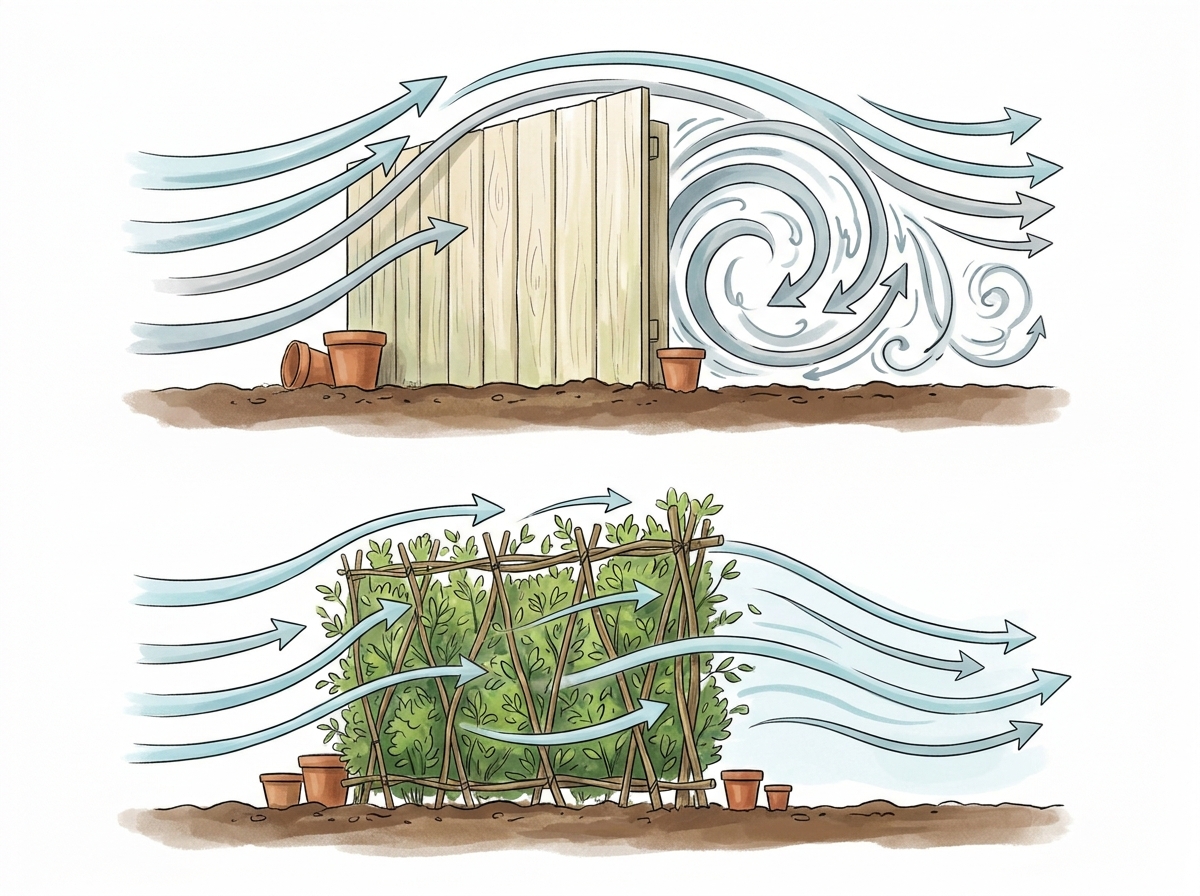
The prevailing wisdom often favours solid barriers for wind protection. However, for horticultural purposes, permeable windbreaks, typically with 50% porosity, are superior. Solid walls create turbulent, high-velocity eddies on their leeward side, which can be more damaging than the original wind. Permeable structures, conversely, reduce wind speed gradually, creating a zone of calmer air with less destructive turbulence. The optimal ratio of shelter height to the protected area's width is generally 1:10 for effective deceleration without stagnation. Consider species like *Amelanchier lamarckii*, *Crataegus monogyna*, or *Corylus avellana* for dense, permeable hedging.
Leveraging Thermal Mass and Reflected Heat
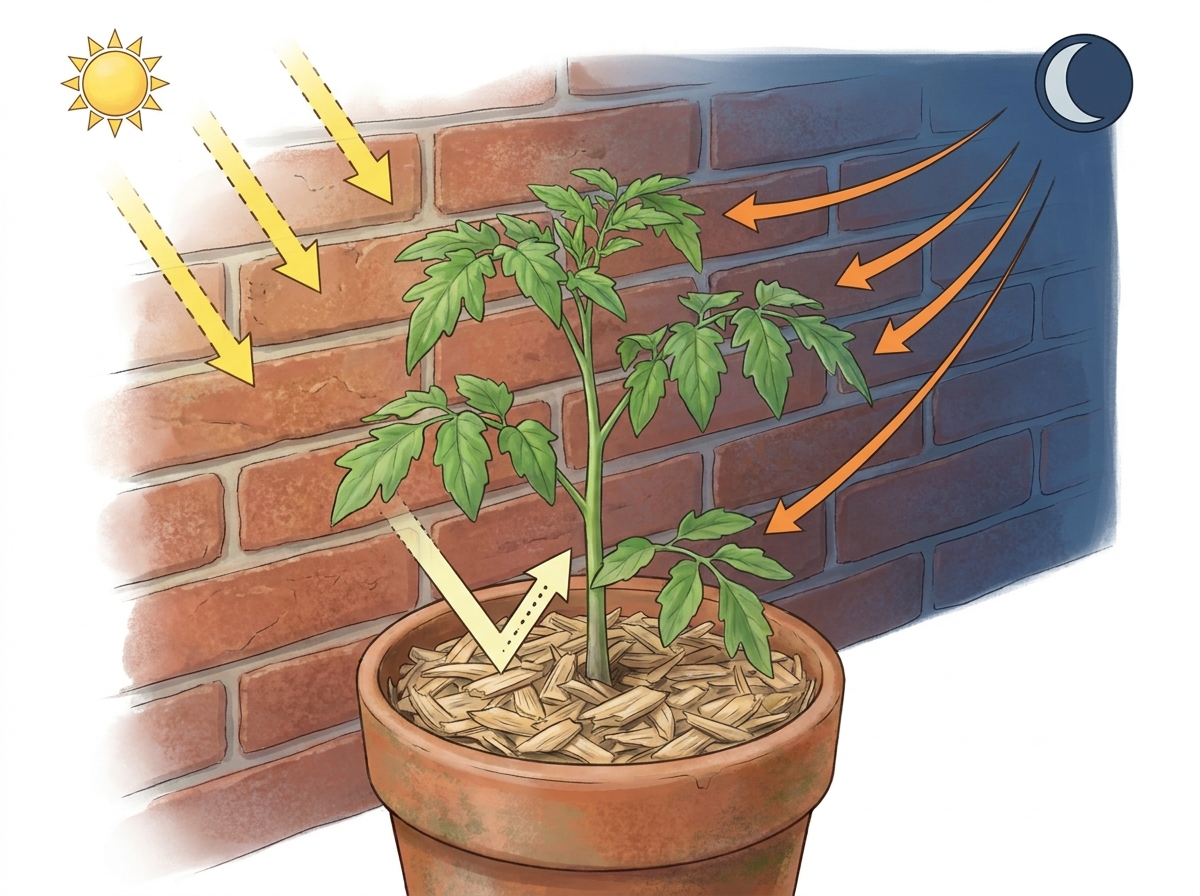
Walls, particularly those constructed from dense materials like stone, brick, or concrete, act as thermal mass. They absorb solar radiation during the day and release it slowly at night, moderating extreme temperature fluctuations. Positioning sensitive plants adjacent to these surfaces, especially on the sunniest side (south-facing in the northern hemisphere, north-facing in the southern), capitalises on this stored heat. This effect is amplified by reflective surfaces, such as pale-coloured walls or strategically placed mulch, which increase the amount of solar energy available to the plants and the thermal mass.
Understanding and Mitigating Frost Pockets
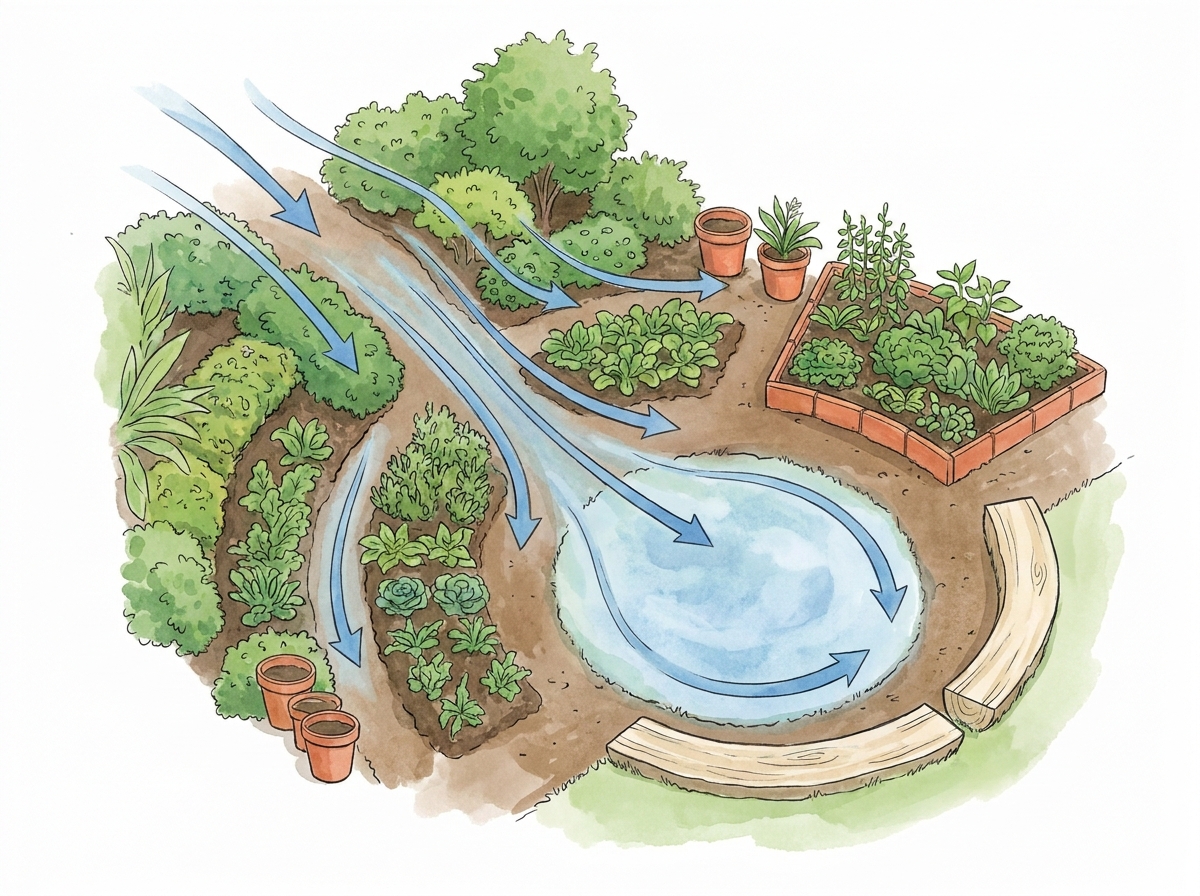
Cold air is denser than warm air and, under calm conditions, flows downhill, accumulating in low-lying areas. These 'frost pockets' can be significantly colder than surrounding higher ground, posing a severe risk to sensitive plants, particularly during late winter and early spring when frost is most damaging. Topography is key: identify natural drainage channels for cold air and avoid planting frost-tender species in hollows or at the base of slopes where cold air collects. Creating subtle breaks in dense planting or incorporating permeable barriers can help to channel cold air away, preventing dangerous pooling.
- Site Assessment for Frost Pockets: Walk your site during calm, clear, cold evenings (after sunset) and early mornings (before sunrise) to observe cold air movement and accumulation.
- Identify Low Points: Note any depressions, hollows, or sheltered corners where cold air is likely to settle.
- Observe Existing Drainage: Understand natural pathways where cold air flows downhill. Aim to keep these pathways clear.
- Avoid Obstructions: Do not create barriers (dense hedges, solid walls) that impede the natural drainage of cold air from higher ground into lower areas.
- Strategic Planting: Locate frost-tender species on slight elevations or slopes where cold air can drain away, rather than in the lowest points.
Reading Your Site: Warm and Cold Corners
Every garden possesses inherent warm and cold zones dictated by sun exposure, wind patterns, and topography. The sunniest side of structures, often south-facing (northern hemisphere) or north-facing (southern hemisphere), will be warmer. Walls that accumulate thermal mass also create warm zones. Conversely, sheltered corners exposed to prevailing winds, or low-lying areas, will be colder. Careful observation over at least one full diurnal cycle, and ideally through different seasons, will reveal these microclimates. Use this knowledge to site plants according to their specific needs: place heat-loving species in warm corners and hardier plants in cooler, more exposed areas. Consider the impact of deciduous trees – they provide summer shade but allow winter sun, altering microclimates seasonally.
When assessing your site, particularly on slopes or near water bodies, be aware of potential hazards. Use sturdy footwear and exercise caution when navigating uneven terrain. If using ladders for observational purposes or site modification, ensure they are stable, correctly positioned, and that you have a clear understanding of safe operating procedures. Never compromise on safety equipment.