
Kitchen Scrap Superstars: Grow New Plants!
Turn your food waste into amazing new green friends right on your windowsill. Let's see which kitchen scraps can grow!
Have you ever wondered what happens to the bits of vegetables you throw away? Some of them can actually grow into new plants! It's like a magic trick, but it's science. We're going to try growing a few different things from kitchen scraps. It's a fun experiment to do on a sunny windowsill.
What You'll Need:
- A carrot top (the leafy green part with a bit of the carrot attached)
- The white base of a spring onion (scallion)
- A garlic clove (the individual pieces of a whole garlic bulb)
- An 'eye' from a potato (a little bump where a sprout can grow)
- An avocado stone (the big seed from inside an avocado)
- Small pots or jars
- Water
- A sunny windowsill
- A notebook or paper and a pencil for your diary
Let's Get Growing!
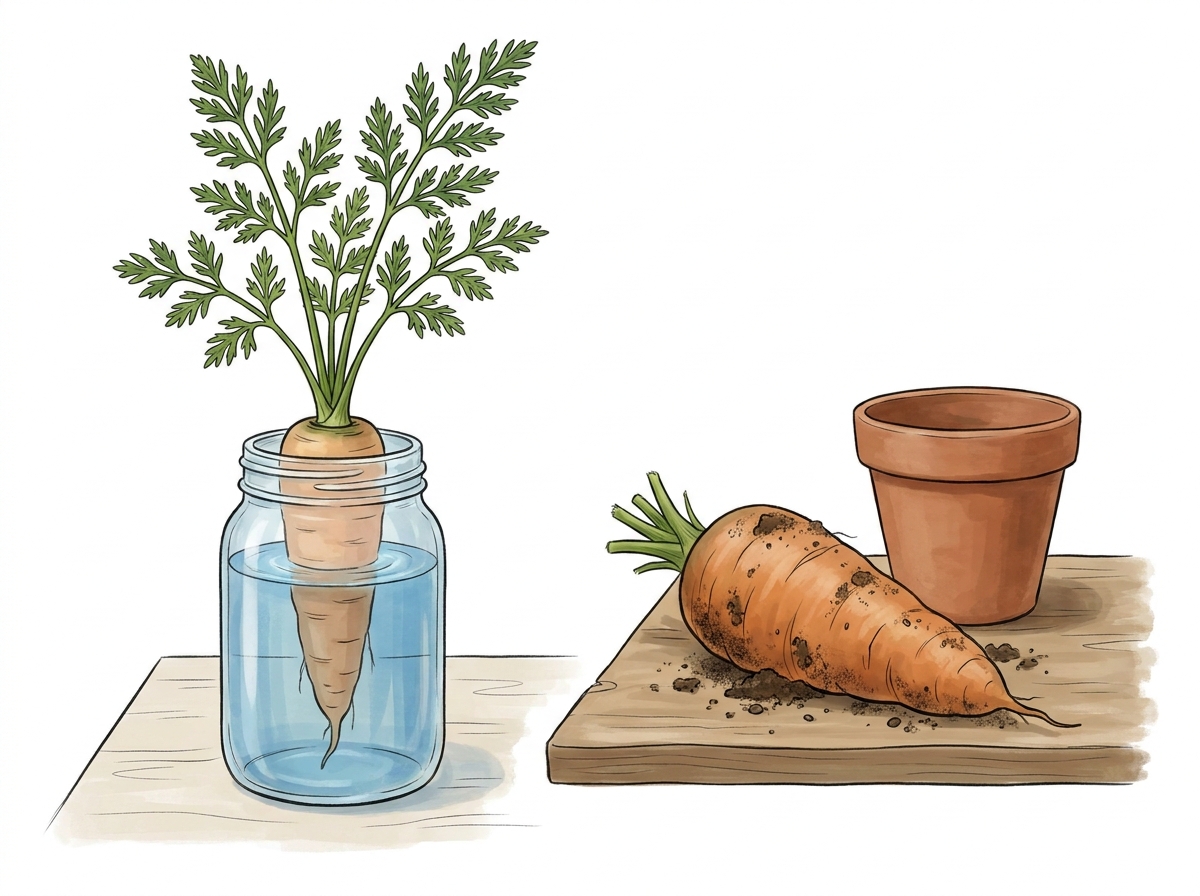
- Carrot Top: Take the leafy top and place it cut-side down in a shallow dish of water. Make sure the water just covers the cut part. Put it on your windowsill.
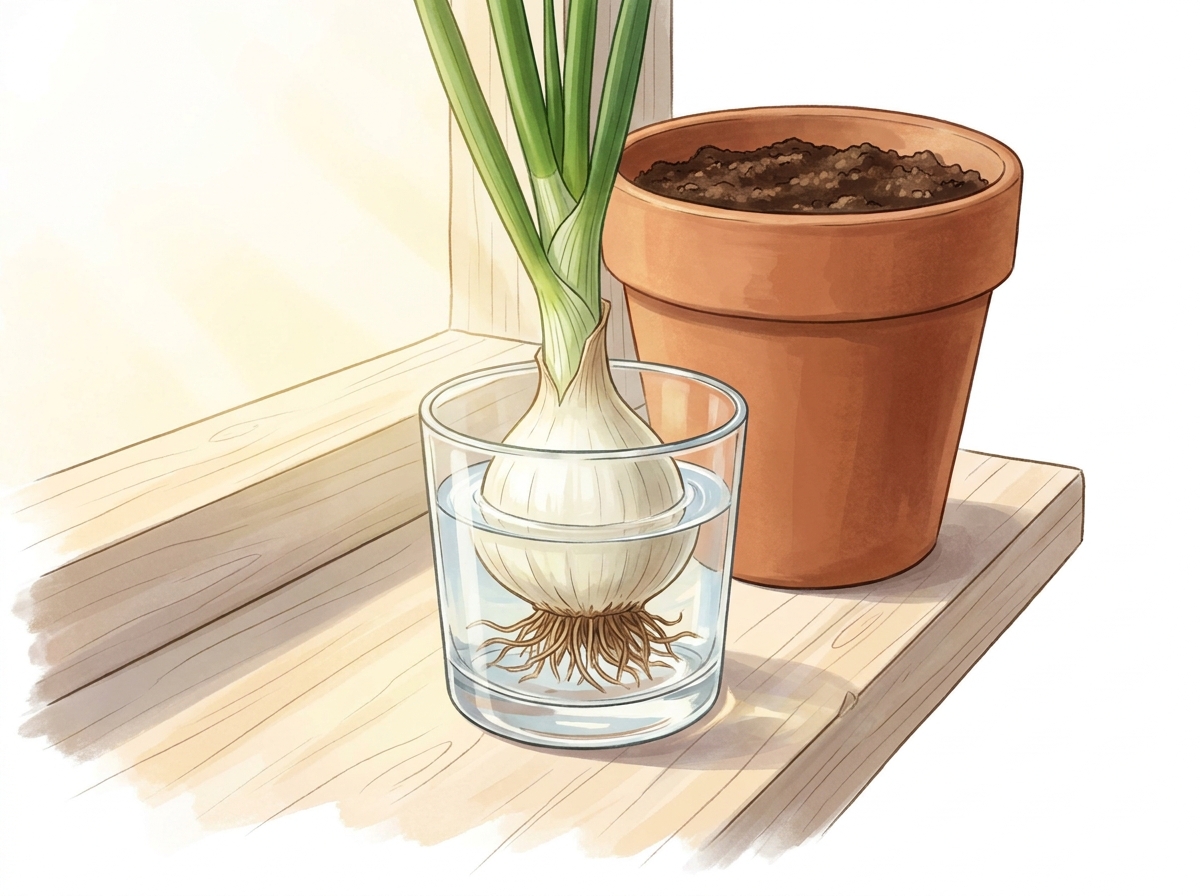
- Spring Onion Base: Place the white base of the spring onion in a small glass or jar with just enough water to cover the roots. Keep it on your windowsill.
- Garlic Clove: You can try planting a whole garlic clove directly into a small pot of soil, pointy end up. Water it gently. Or, you can put it in a little water and see if it sprouts first.
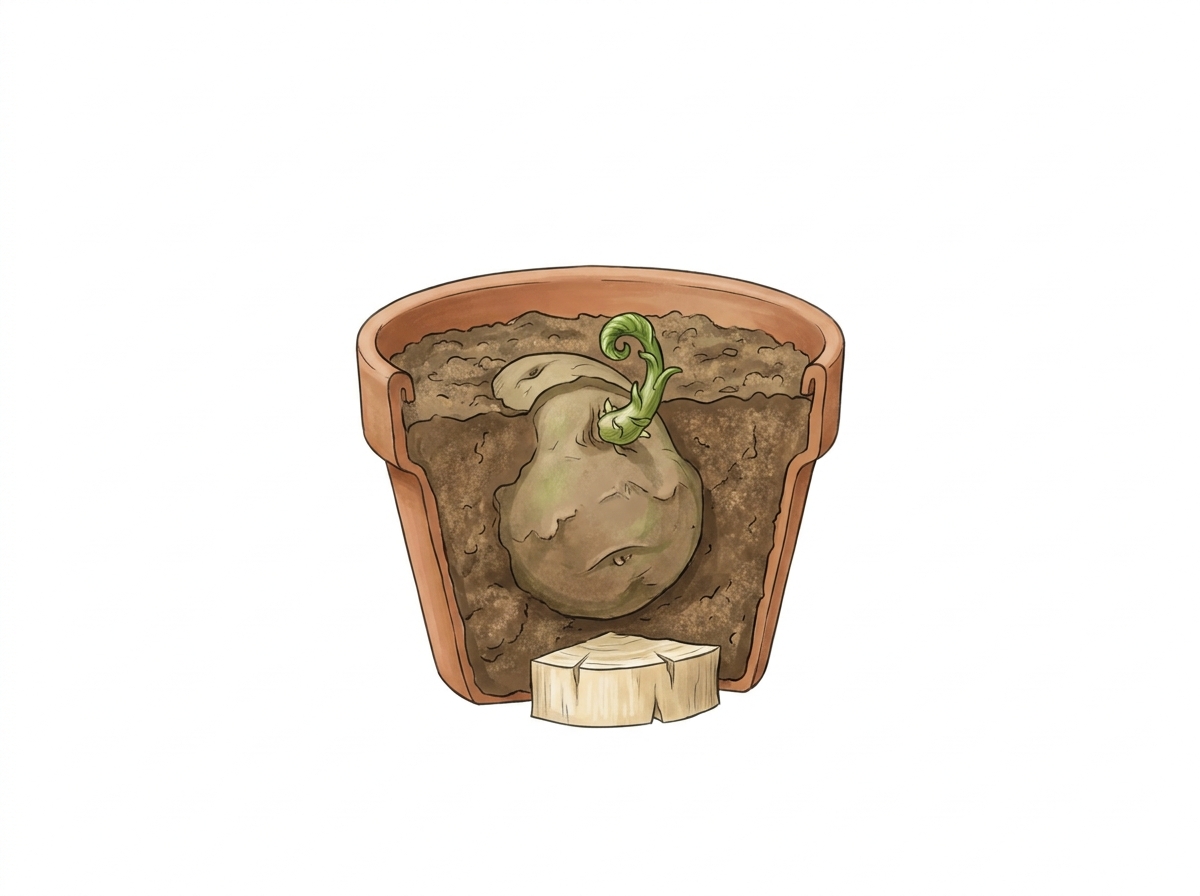
- Potato Eye: If you have a potato with a sprout starting (an 'eye'), you can cut it out, making sure there's a little bit of potato attached. Let the cut side dry for a day, then plant it in soil, eye-side up.
- Avocado Stone: This one takes a bit longer! Carefully clean the avocado stone. You can stick three or four toothpicks into the sides, about halfway up. Rest these toothpicks on the rim of a glass of water, so the bottom half of the stone is submerged. Put it in a warm spot.
What Will They Become?
It's important to know that not all these kitchen scraps will grow into the plants you might expect, or they might not grow into edible parts again. The carrot top will grow more leafy green tops, but it won't grow a new carrot you can eat. The spring onion will grow new green shoots, and you might be able to snip them to use in cooking! The garlic clove might sprout and grow green shoots, but it probably won't make a whole new bulb. The potato eye will grow into a potato plant, which has leaves and stems, and might even produce new small potatoes underground, but the original potato piece will rot away. The avocado stone will grow a stem and leaves, but it won't produce avocados unless it's a special type of tree grown from a seed and pollinated, which is very rare indoors.
Your Plant Diary
This is where you become a scientist! Get your notebook ready. Every few days, look at your kitchen scrap plants. Draw a picture of what you see. Write down what's happening. Is the spring onion getting taller? Are there new leaves on the carrot top? Is the avocado stone starting to crack? You can give each plant a score out of 5 for how well it's doing. This helps you see which ones are the best growers!
Looking After Your Green Friends
Keep the water topped up for the carrot top and spring onion. Make sure the soil for the garlic and potato stays a little bit damp, but not soggy. The avocado needs its water changed every few days to keep it fresh. All these plants love sunlight, so the sunniest windowsill is the best place for them. Be patient! Some plants grow faster than others.
Be careful when using toothpicks for the avocado stone; always ask an adult for help to avoid pricking yourself. Also, while most of these plants are safe, never eat any part of a plant you are growing indoors unless you are absolutely sure it is edible and safe. Some plants can cause tummy aches if eaten.