
Container Tomatoes: Your Bumper Crop Awaits!
From tiny seedling to juicy fruit, master growing tomatoes in pots with this easy guide.
Growing your own tomatoes in pots is incredibly rewarding, delivering fresh, flavourful fruit right to your kitchen. This guide will walk you through everything from choosing the right variety to harvesting your first delicious tomatoes.
Bush vs. Cordon: Which is Right for Your Pot?
For container growing, 'bush' (determinate) varieties are often easier. They grow to a certain size, fruit all at once, and don't need much pruning. 'Cordon' (indeterminate) varieties grow much taller, fruit over a longer period, and require regular pinching out of side shoots. If you have limited space or prefer less maintenance, go for bush types.
Potting Up: Size Matters!
Start with small pots (around 7-10cm or 3-4 inches) for seedlings. Once they have a few true leaves, it's time to pot on. For a single tomato plant, a minimum of a 20-litre (4.5-gallon) pot is recommended. Bigger is always better for water retention and root space.
Use a good quality, peat-free compost. A mix designed for vegetables or containers is ideal. You can add a handful of slow-release fertiliser pellets to the pot before planting to give them a good start.
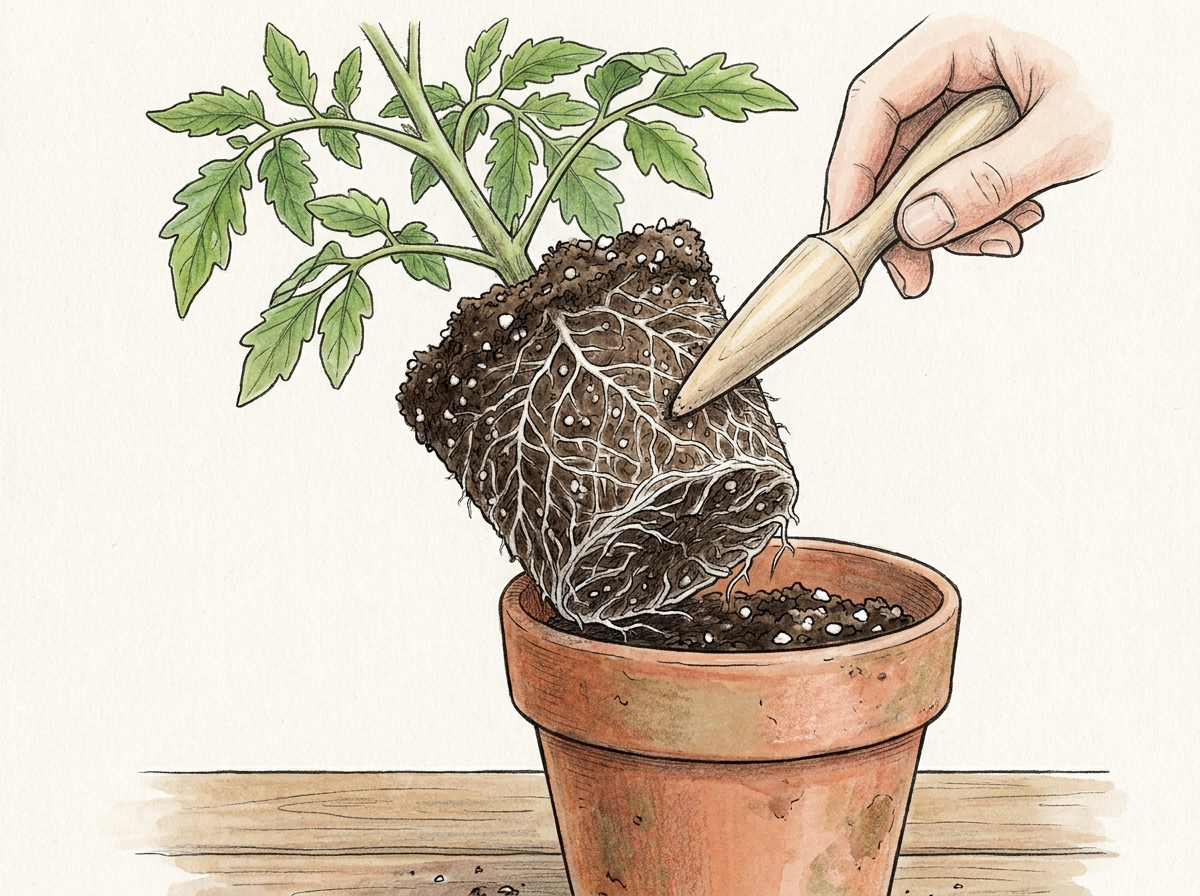
Potting On: The Next Step
- Water your seedling thoroughly about an hour before potting on.
- Choose your final pot (at least 20 litres or 4.5 gallons). Ensure it has drainage holes.
- Add a layer of fresh compost to the bottom of the new pot.
- Carefully remove the seedling from its current pot. If the roots are tightly bound, gently tease them apart.
- Place the seedling in the new pot. For taller varieties, you can plant them deeper than they were in their original pot – up to the first set of leaves. This encourages more root growth.
- Fill the pot with compost, firming gently around the base of the stem.
- Water well to settle the compost.
Support and Pruning (Cordon Varieties)
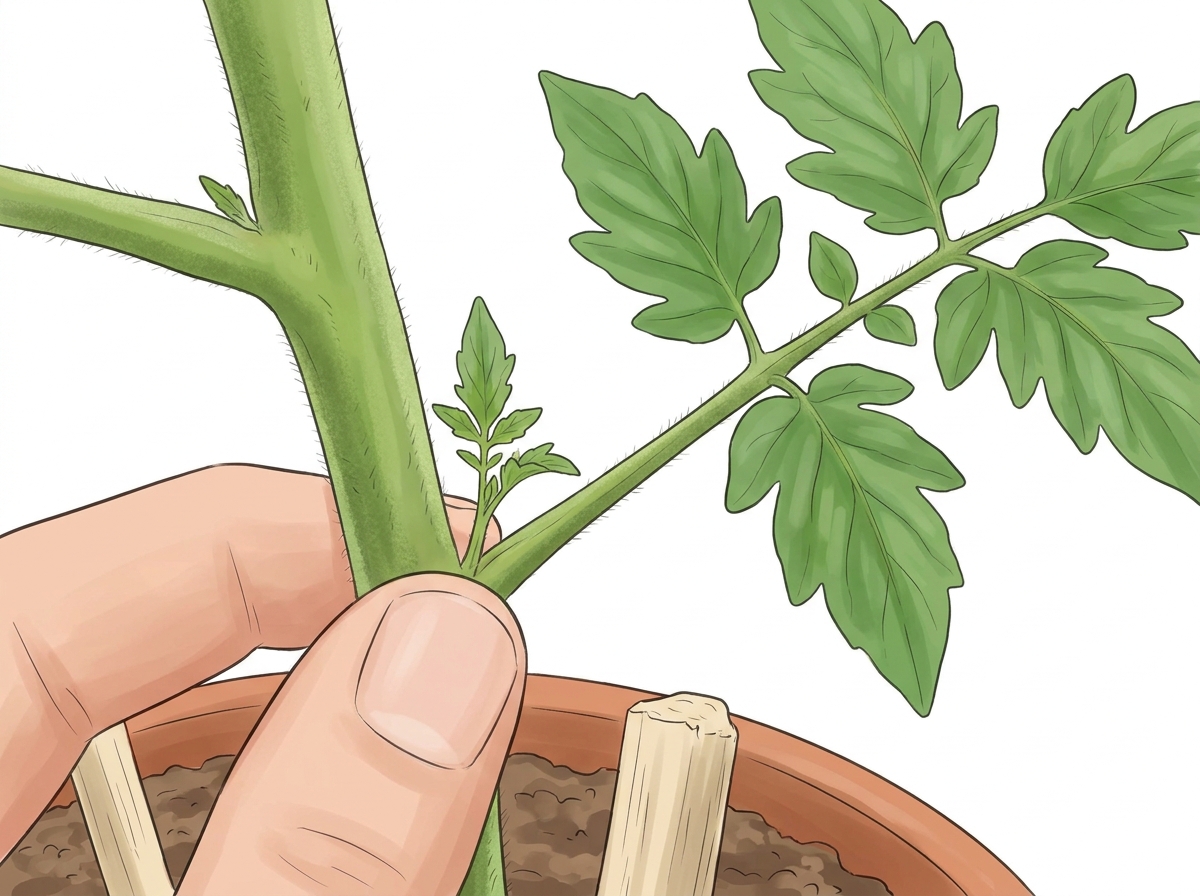
Cordon tomatoes need support as they grow tall. Install a sturdy stake or cage at planting time to avoid disturbing the roots later. As the plant grows, tie the main stem loosely to the support. You'll also need to remove 'side shoots' – the small stems that grow in the 'V' between the main stem and a leaf branch. Pinch these out regularly when they are small.
Feeding Your Fruiting Friends
Once your tomatoes start to set their first truss (flower cluster), it's time to feed them. Use a liquid feed specifically for tomatoes, which is high in potassium. Feed every 10-14 days, following the manufacturer's instructions. Don't feed too early, as it can encourage leafy growth at the expense of fruit.
Troubleshooting Common Issues
Blossom End Rot: This looks like a dark, leathery patch on the bottom of the fruit. It's usually caused by inconsistent watering and a lack of calcium. Ensure your plants are watered regularly and deeply, especially during dry spells. Mulching can help retain moisture.
Fruit Splitting: This often happens when there's a sudden influx of water after a dry period. Again, consistent watering is key. If fruits are starting to ripen, try to keep the watering steady.
Always wear gloves when handling fertilisers and follow the dilution instructions carefully to avoid burning the plants or yourself. Ensure pots have good drainage to prevent waterlogging, which can lead to root rot.
Place your pots in the sunniest, most sheltered spot you have. Tomatoes love warmth and protection from strong winds. Happy growing!