
Bee Buffet: Your All-Season Pollinator Paradise
Discover how to create a garden border that provides continuous food for bees from the first flower of spring to the last bloom of autumn. Learn why continuity matters, what plants to choose, and how to plant for maximum impact.
Bees need food all year round, but their needs change. Early spring sees queens emerging, hungry after winter. Mid-summer is a busy time for foraging. By late autumn, resources dwindle, and bees prepare for winter. A continuous supply of nectar and pollen is far more valuable than a single spectacular display. This guide will help you plan a border that offers a steady feast for our vital pollinators.
Why Continuity is King (or Queen Bee!)
Think of it like a supermarket. If it's only open for a week in July, it's not much use. Bees need a reliable source of food throughout their active season. Early emerging bees need sustenance to build their colonies. Mid-season workers need energy for foraging and reproduction. Late-season bees need to build up fat reserves for winter or support the next generation. Providing food sources that bloom sequentially ensures they always have something to eat.
Flower Power: Single vs. Double Blooms
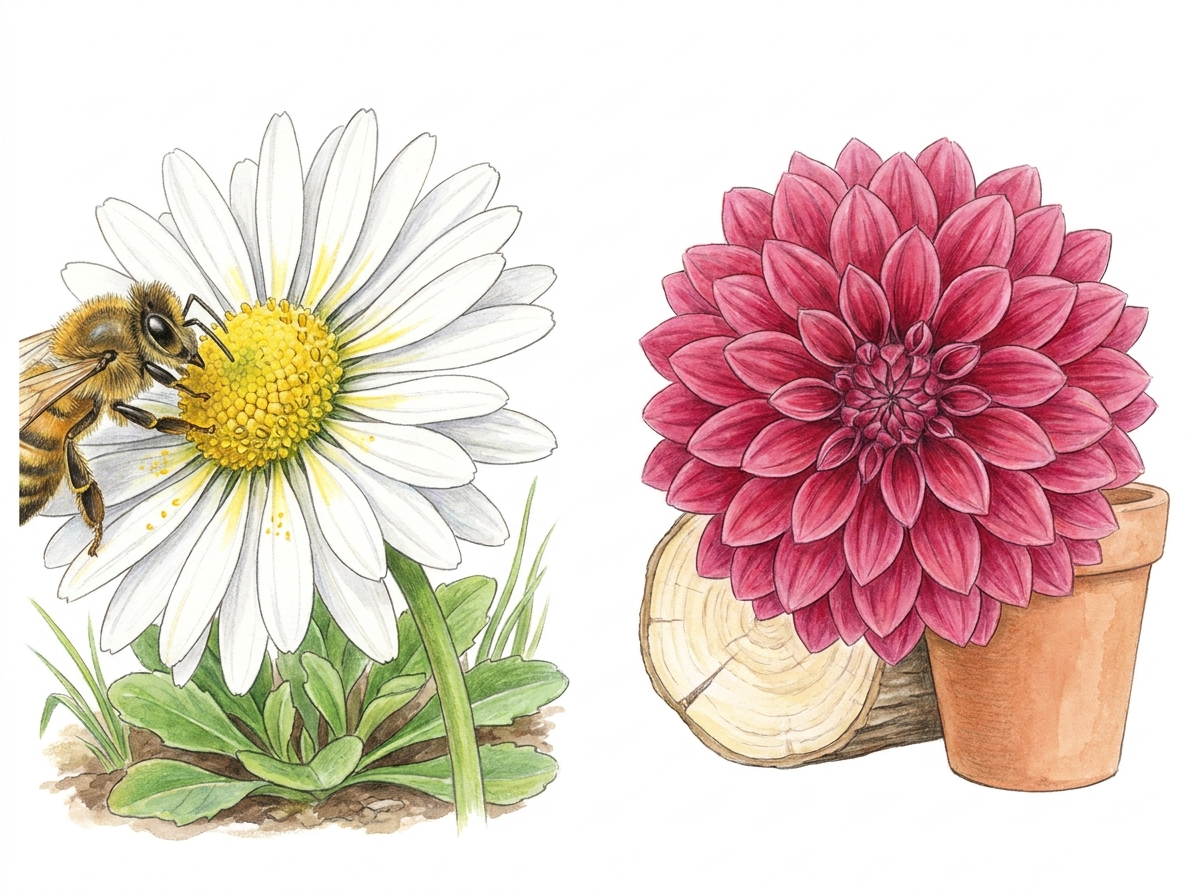
When choosing plants, opt for single-flowered varieties over double-flowered ones. Single flowers typically have easily accessible nectar and pollen in their centres. Double flowers, with their extra petals, can make it difficult or impossible for bees to reach the rewards inside. For bees, it's all about accessibility!
Planting in Blocks: Strength in Numbers
Bees are more likely to visit a patch of the same flower than scattered individuals. Planting in generous blocks or drifts of at least 1 square metre (approx. 3 square feet) makes it easier for bees to find and forage efficiently. This visual cue helps them spot a valuable food source from a distance.
Bridging the Gaps: Early and Late Season Stars
The 'hungry gaps' are when natural forage is scarce. We need plants that flower reliably during these critical times. Early spring is vital for newly woken queens, and late autumn provides the last meals before winter.
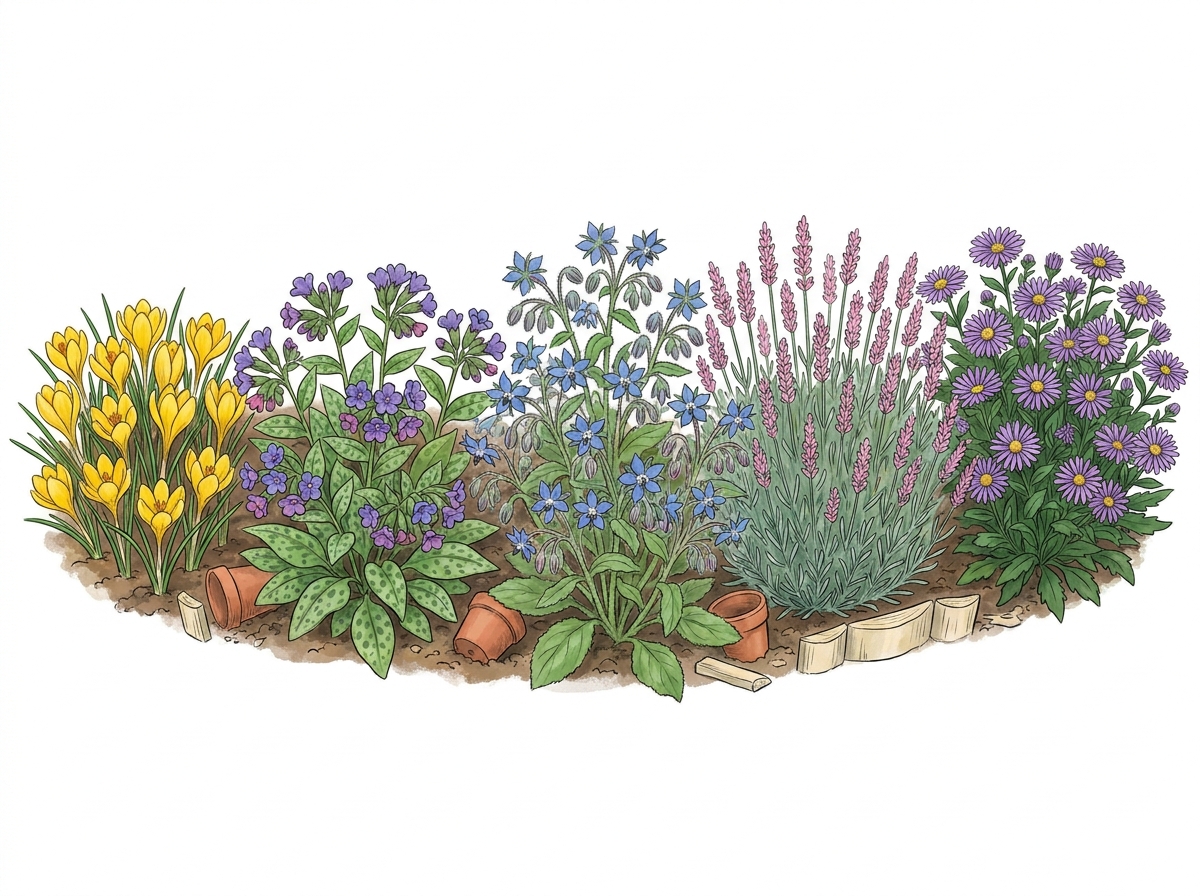
- Early Spring (from first warmth): Lungwort (Pulmonaria), Willow (Salix species – catkins), Crocus, Snowdrops (Galanthus).
- Late Spring/Early Summer: Borage, Comfrey (Symphytum officinale), Poached Egg Plant (Limnanthes douglasii).
- Mid-Summer: Lavender (Lavandula), Echinacea, Sedum (Stonecrop), Nasturtium (Tropaeolum).
- Late Summer/Autumn: Aster, Rudbeckia, Goldenrod (Solidago), Ivy (Hedera helix – flowers very late).
What Bees DON'T Love
Some popular garden plants offer little to no benefit for bees. These often include highly hybridized varieties with complex structures or those bred purely for ornamental value. Examples include many ornamental cherries, some highly bred roses (especially double forms), and plants with highly modified petals that don't produce nectar or pollen readily.
Creating Your Pollinator Border: A Step-by-Step Plan
- 1. Plan your space: Choose a sunny spot. Consider the mature size of your chosen plants.
- 2. Select your plants: Aim for a mix of early, mid, and late-flowering species. Prioritise single-flowered varieties and plants known for attracting bees.
- 3. Prepare the soil: Once the soil is workable, loosen it and incorporate some compost to improve drainage and fertility.
- 4. Plant in blocks: Group plants of the same species together in drifts of at least 1 square metre (approx. 3 sq ft).
- 5. Consider height: Place taller plants at the back of the border and shorter ones at the front.
- 6. Water well: Water new plants thoroughly after planting.
- 7. Mulch: Apply a layer of mulch to retain moisture and suppress weeds.
- 8. Maintain: Deadhead spent flowers to encourage more blooms, but leave some seed heads for winter interest and food for other wildlife. Avoid using pesticides.
Always wear sturdy gloves when handling plants, especially those with thorns or sap that can irritate the skin. Use appropriate tools like secateurs or a spade for planting and maintenance, ensuring they are clean to prevent disease spread. If using any soil amendments or pest control (though discouraged for a bee-friendly garden), always follow the manufacturer's instructions precisely and keep children and pets away from treated areas.
Enjoy the Buzz!
By following these principles, you'll create a vibrant, buzzing haven that supports bees throughout their active lives. Not only will you be helping these essential pollinators, but you'll also enjoy a beautiful and dynamic garden border.